
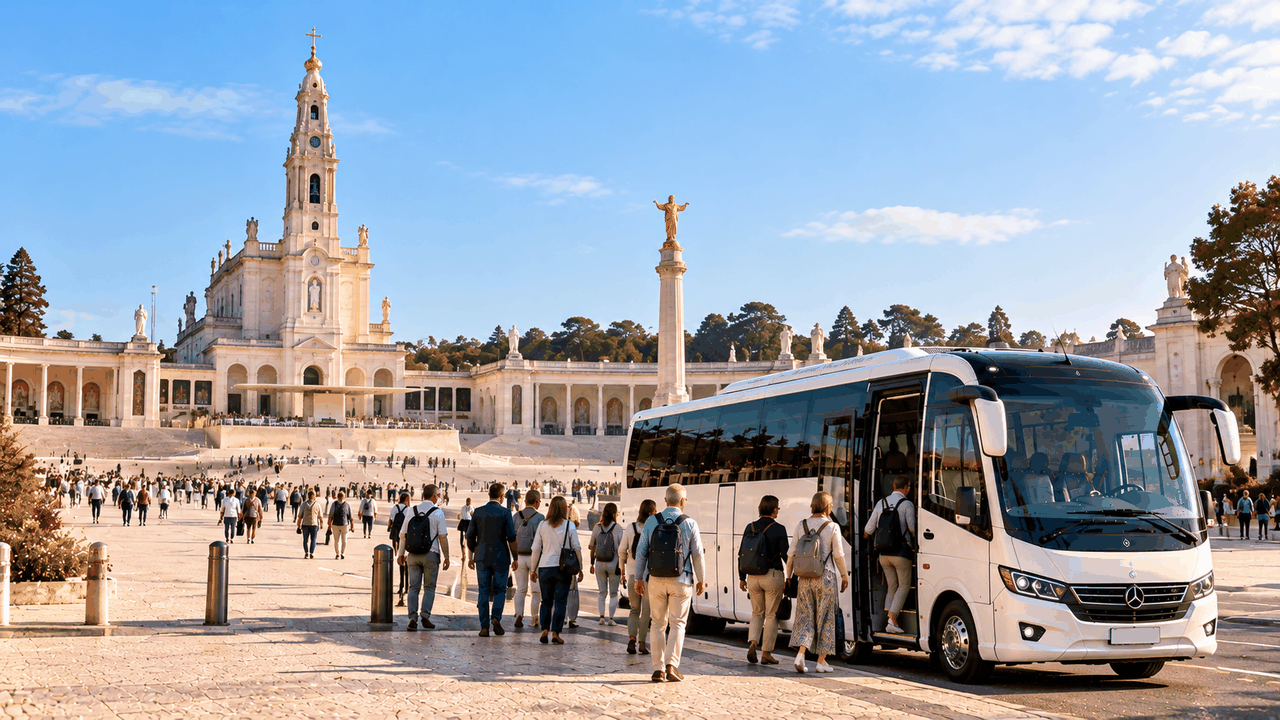
Private group transport for Fátima
A private bus or coach is a practical way for an organised group to visit Fátima without splitting across taxis or relying on public transport connections. The journey can be planned from Lisbon, Porto and Central Portugal and adapted around the group’s hotel, passenger count and the activities already booked. Typical use includes pilgrimage groups, church visits and organised day trips.
The advantage of a private vehicle is coordination: the group has an agreed pickup, the luggage or day bags stay with the transport plan, and the driver works to the itinerary rather than a fixed public timetable. The schedule still needs to be realistic, especially when the destination has visitor traffic or restricted access.
Planning the day
Large religious events can change road access and coach parking arrangements. Group leaders should build in time for passenger assembly and agree a clear post-visit meeting point.
Start with the fixed commitments. If there is a timed admission, boat trip, restaurant reservation, service, winery appointment or event, that time should anchor the itinerary. Driving and loading can then be built around it. Trying to add too many stops after the schedule is already full usually creates a rushed day and increases the chance of missing a reservation.
Choosing the right vehicle
Vehicle selection depends on passengers, luggage and access. Small groups may prefer an MPV or minibus; medium groups can use a mini coach; and larger parties generally travel more efficiently in a full-size coach. However, the biggest vehicle is not always the most practical if the destination involves narrow streets or constrained loading areas.
Tell the quotation team about wheelchairs or mobility requirements, pushchairs, golf equipment, musical instruments or other bulky items. These can affect both vehicle size and loading arrangements.
Pickup points and meeting arrangements
Groups can normally plan departures from hotels or agreed central locations in Lisbon, Porto and Central Portugal. At the destination, the safest meeting point may be a coach park or designated loading area rather than the exact attraction entrance. That is normal for many busy visitor sites.
Before passengers leave the vehicle, the group leader should confirm the return time and location. A written message in the group chat can be useful because several car parks or entrances may look similar when the group returns later.
Combining nearby destinations
Depending on the day length, Fátima can sometimes be combined with Batalha, Nazaré, Óbidos and Coimbra. Whether this is sensible depends on the starting point, season, reservation times and how long the group wants at each place. A focused itinerary is usually better than collecting destinations simply to increase the number of stops.
For a multi-day Portugal programme, related destinations can be separated across different days and combined with hotel changes. This often reduces backtracking and gives the group more time at each location.
Food, comfort and timing
Group travel works better when the itinerary includes practical breaks. Lunch for thirty or fifty passengers can take longer than lunch for a couple, and some restaurants require advance group reservations. If the coach journey is long, include rest stops rather than assuming everyone can remain seated for the whole route.
Season also matters. Summer heat and coastal traffic can affect Algarve days, while winter daylight and weather can influence mountain or countryside plans. The transport schedule should support the experience rather than simply maximise driving.
Request a quote
For a Fátima transport quote, provide the travel date, pickup point, passenger count, planned stops and any fixed reservation times. Add luggage if the journey involves hotel changes rather than a simple day trip. If the group needs a guide as well as transport, say so during the enquiry so that requirement is clear.
Once the route is agreed, review the written itinerary and make sure all important stops and timings are included. Changes are easiest to manage before the travel day rather than when the vehicle is already operating.